

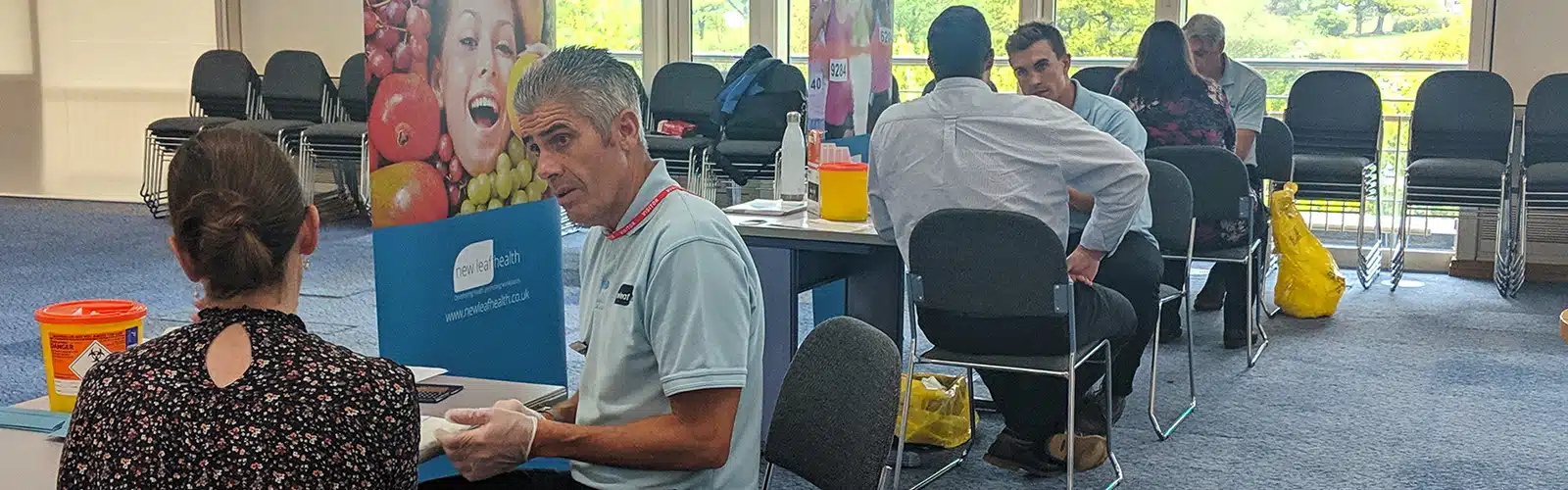
New workplace health screening statistics from New Leaf Health show that 28% of screening attendees could have underlying health problems – that’s just over 1 in 4 people.
Employee Health Screenings, which are carried out by New Leaf Health in workplaces across the UK, test for various cardiovascular markers through a quick finger-prick blood test. Between January and July 2026, New Leaf Health tested 1,764 employees at organisations across the UK. Of those, 495 attendees were advised to book an appointment with their GP for follow-up testing due to results outside the recommended ranges.
These health screening statistics suggest that employers can play a pivotal role in preventing health problems amongst the workforce, as these underlying health conditions may otherwise go unnoticed without proactive testing.
Key findings
New Leaf Health screened 1,764 UK employees between January and July 2026. 28% (495 people), more than one in four, were advised to visit their GP for follow-up testing after results fell outside recommended ranges.
- 28% of attendees referred to their GP (495 of 1,764)
- Three cardiovascular markers tested: blood pressure, cholesterol and blood glucose
- Screenings carried out in workplaces across the UK via a quick finger-prick blood test
- Results measured against NICE guidance for healthy ranges
Source: New Leaf Health workplace health screening data, January to July 2026.
Preventative Workplace Health Screening
The Employee Health Screenings check three key cardiovascular markers in attendees:
- Blood pressure
- Cholesterol levels
- Blood glucose levels
These results are then compared against NICE guidelines, which act as standardised evidence-based recommendations across the UK health sector. Recommended ranges for healthy adults are:
- Blood pressure below 140/90 mmHg
- Total cholesterol below 6.0 mmol/L
- Fasted blood glucose below 7.0 mmol/L
Attendees who fall outside these ranges are recommended to visit their GP for further testing.

The National Stats
Both nationally and internationally, high blood pressure is one of the primary risk factors in premature death amongst adults. In the UK, it’s estimated that around 1 in 3 adults have high blood pressure, according to Blood Pressure UK. Half of people with the condition are not diagnosed or receiving treatment, which equates to more than 5 million people in England alone.
According to the NHS Health Survey, just under half (48%) of all adults have raised cholesterol, with the stat for women being at 50%, and men at 45%. Similar to high blood pressure, high cholesterol levels don’t usually cause any symptoms either. A person will usually only find out their cholesterol is too high if they have a blood test or if the condition goes untreated and leads to a heart attack or stroke.
Research from Diabetes UK indicates that 4.7 million people in the UK live with a diabetes diagnosis, but it’s also estimated that there are an additional 1.3 million people living with type 2 diabetes who are yet to be diagnosed. Type 2 diabetes does have more noticeable symptoms than high blood pressure or high cholesterol, but it can still go undetected for a long time, meaning a blood test is the most reliable way to diagnose the condition.
In many cases, high blood pressure, high cholesterol, and high blood glucose can be reduced by making simple lifestyle changes, such as improving diet and increasing physical activity. Lifestyle changes should only be made under the advice of your GP, though.
Why Employers Should Care About Prevention
Workplace health screenings fall into the category of preventative health checks. In other words, these checks are undertaken proactively rather than in response to specific symptoms. Conditions like high blood pressure, in fact, often have no symptoms at all.
These types of checks don’t replace NHS diagnosis or treatment, and the results of a workplace health screening aren’t a diagnosis, either. They do, however, act as a prompt for people to visit their GP and show them their results for further investigation, testing, and treatment.
The health checks also offer the employee the opportunity to have conversations around their health and how they can improve or maintain their numbers, including lifestyle topics such as physical activity, sleep, nutrition and diet, smoking, and more, giving employees greater awareness around their own health and choices.
These figures come at a time when absenteeism and presenteeism figures in the workplace are rising and causing direct costs to workplaces.
Bringing Health into the Workplace
With the NHS facing sustained pressure, routine employer-led health checks are proving to be a vital preventative measure. Catching asymptomatic markers early allows workers to make critical dietary or lifestyle adjustments before serious conditions require acute emergency care.
Andy Lee O’Neil, Director at New Leaf Health, commented: “Personal health can often fall to the bottom of an employee’s to-do list until symptoms appear, especially in a busy workplace. Offering routine health checks as a workplace benefit breaks that cycle. It gives staff total peace of mind in just ten minutes, while helping employers build a resilient, healthy workforce from the inside out.”
If you’re interested in finding out more about Employee Health Screenings, click below to explore options and to see what’s tested.
Frequently Asked Questions About Workplace Health Screening Statistics
What percentage of employees are referred to their GP after a workplace health screening?
28%, or just over 1 in 4, attendees are recommended to visit their GP after a workplace health screening, according to New Leaf Health. It’s important to note that, as the screenings are not diagnostic, these are not referrals but simply recommendations.
What does a workplace health screening test for?
A workplace health screening typically tests:
– Blood pressure
– Cholesterol levels
– Blood glucose levels
Additional checks can be added to health screenings, including stats such as BMI and body composition, too.
Is a workplace health screening a medical diagnosis?
No, a workplace health screening is not a medical diagnosis. It’s a simple, easy-to-access point-of-care test that gives almost immediate results and feedback to an attendee. A medical diagnosis can only take place under the care of a medical professional.
How many employees did New Leaf Health screen?
New Leaf Health screened 1,764 employees at organisations across the UK between January and July 2026. Of those, 495 attendees were advised to book an appointment with their GP for follow-up testing due to results outside the recommended ranges.
Why don’t high blood pressure or high cholesterol show symptoms?
High blood pressure and high cholesterol levels don’t show symptoms primarily because they develop gradually over a number of years. As such, your body changes slowly, so you won’t really notice a difference.
Additionally, both of these conditions primarily affect your blood vessels and arteries, which lack any nerve endings, so your body doesn’t feel any physical change or pain.