

Due to the global pandemic in 2020, many companies had no choice but to introduce remote working options. Even after the lockdowns, many companies kept this in place or adopted a hybrid work style, with employees embracing the great work-life balance it provided. Despite working five days a week in the office previously being the norm, it’s now unimaginable to many.
However, in the past couple of years, more and more companies have enforced a return-to-office (RTO) policy, meaning employees have to go back to working five days a week in the office. In this blog, we’ll discuss why companies are making this decision, what this might mean for employees, and the return-to-office pros and cons. We’ll also provide tips and advice on how to support employees returning to the office.
Why are Companies RTO?
There are a few different reasons why companies are opting for return to work, the most stated being:
Increased team productivity: Although many believe productivity is equal, or often better, when working from home, studies have shown mixed results. Although individual tasks may be completed efficiently remotely, it is found that in-person teams are more creative, innovative, and collaborative.
Fewer distractions: There is concern about becoming distracted when working remotely. Often, employees will juggle household responsibilities whilst working from home; simply putting a quick wash on or tidying up can fragment focus.
Prevent burnout: Although remote working can reduce commute times, it can be easier to work longer hours at home due to the boundaries between work and personal life becoming blurred. This habit can lead to burnout.
Improve workplace culture: Many companies worry about losing a positive culture due to remote work. It’s much harder to replicate in-the-moment idea sharing and professional development and mentorship in a virtual setting. McKinsey found that younger employees, in particular, struggled to build professional networks remotely, leading to long-term career stagnation.
Mentorship and onboarding: New hires and junior employees often integrate and learn faster through direct observation and daily proximity to senior staff, which is much easier to do in person rather than remotely.
Regardless of the reasons, there are definitely pros and cons to the RTO decision.
Employer vs Employee Pros and Cons
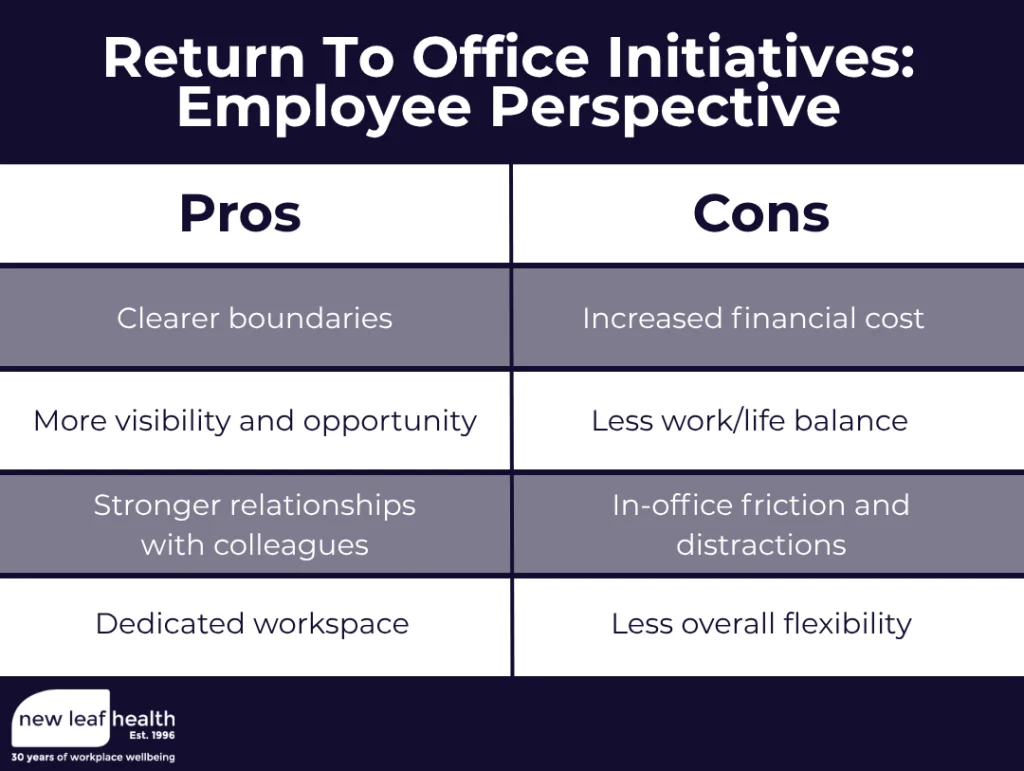
RTO initiatives have pros and cons for both employees and employers. Below, we’ve put together comparison tables to help visualise the arguments for and against RTO, starting with the employee perspective:
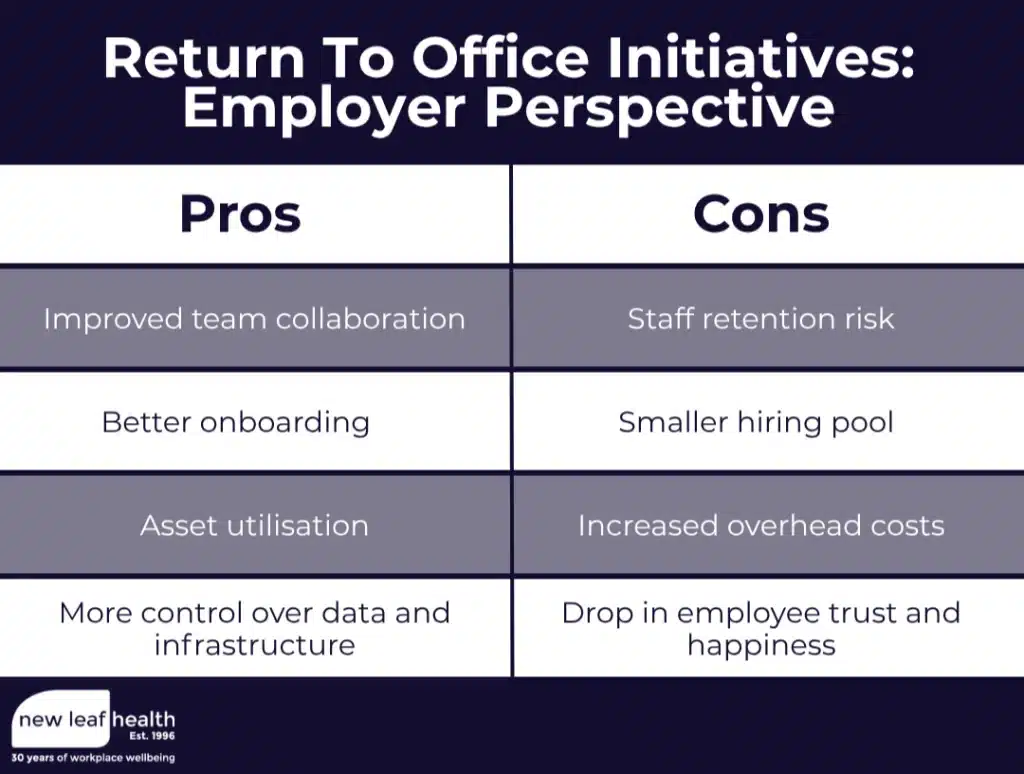
And then the employer perspective:
What do Employees Want?
Survey results published on CFO.com in 2025 show that over half (51%) of employees said they’d quit their job if faced with a non-negotiable RTO mandate. An additional 40% said they’d look for remote jobs. Just 9% claimed they would return to the office without any issue.
According to multiple Reddit threads, the general consensus was that employees did not want to return to the office full-time. Instead, they’d prefer remote or hybrid working. Although a small minority of Reddit users do value in-person time, saying some tasks are easier in person, such as training, many Reddit users said they would quit if their company made them go back to the office five days a week.
How to Help Employees Transition
Returning to the office, even just one extra day, can be a big change for employees. It affects work-life balance and often requires further travel costs. Employers need to approach this change carefully in order to ensure employees’ wellbeing is protected. Below are some strategies to help with this transition:
1. Clear Communication
Nobody likes to be blindsided, especially when it comes to big changes that will affect daily life. Employers need to be open and honest with any business decisions that can affect employees, especially returning to the office.
Employers should involve employees in any initial conversations to find out general feelings, worries or issues employees have around returning to the office. Once a decision has been made, communicate it in plenty of time, outline the reasons why and make the next steps clear.
2. Phased Approach and Flexibility
Returning to the office, especially if staff are currently remote or only in the office one to two days a week, is a huge shift. To make this transition as seamless as possible, it’s important to phase this change in, slowly building up to five days in the office.
If employees are currently fully remote, introduce two days in the office initially. If hybrid, add an extra day. This will allow employees time to figure out factors like travel, childcare, and finances before committing to the full office days. Offering further flexibility, such as flexible start and finish times, can also help people be more open.
3. Incentive
Many people will be resistant to returning to the office full-time without further incentives or benefits offered. Returning to the office is likely going to increase costs for employees and affect their work-life balance. So, understandably, employees will likely want an extra benefit. Incentives could include early finish Fridays, costs towards fuel, or free parking. To find out what type of incentives could help with this transition, survey your employees.

4. Adaptability
Employers should remain open-minded and adaptable amidst this change. Many are opting to bring staff back to the office to enhance collaboration, culture, and productivity. However, many employees have worked remotely for a while now. Some younger staff members might have never worked full-time in an office setting! The way we work now has changed, and that will need to be reflected when supporting employees returning to the office.
Quiet zones for independent working and collaborative spaces for teamwork can be a good way to allow people their own space. It’s also worth bearing in mind that employees may get frustrated if they return to the office and most meetings are still remote. Try to encourage in-person meetings with clients, or have a ‘meeting-free day’, so the team can focus on collaborative working in the office.
5. Physical and Mental Health Support
Returning to the office five times a week is a huge change, and can affect people financially, mentally, and physically. It is important for employers to understand how to support employees returning to the office during this time period, as well as continuously.
Physical health can be affected, as longer commute times can increase the chances of burnout. Also, sitting at a desk every day can cause muscle strain and weakness, neck and back pain, poor circulation, and more. Employers must ensure workstations are ergonomic with proper monitor setups. Also, encourage small breaks to walk around. As for mental health support, companies can integrate confidential aid, such as mental health first aiders that employees can talk to, access to therapy and counselling, and accessible EAP programmes.
Creating a Sustainable Return-to-Office Strategy
Returning to the office five days a week is likely to cause issues amongst employees, with many potentially opting to leave in order to stick to a hybrid or remote position. However, the above strategies may help make the transition smoother, resulting in employees being more open to the idea.
Ultimately, a successful RTO transition comes down to finding the right balance. If employers actively listen to feedback, offer flexibility, and prioritise wellbeing, they can achieve this business goal without sacrificing trust, morale, or talent, or losing staff in the process.