




Health Testing
Events and Clinics
Mental Health
MHFA England
Wellbeing Leadership
Individual Support
Whole Workforce Support
Train 1 to 8 people on a scheduled course.
MHFA Open Courses
Leadership Open Courses
Learn
Download and Explore
Home > Physical Wellbeing > Employee Health Checks > Understanding your Results
Had your health check? Great! Now get to understand your results on a deeper level and learn how to improve your health stats.
Even though the health check only takes seconds, you get an incredible amount of data which gives a great amount of insight into your overall health.
Below, we’ve broken down what each result means and how it relates to your overall health.
You can also check out the video of our Lead Pracitioner, Jordan, talking you through what results mean in more detail.
Resources to help lose weight:
Resources to help build strength:
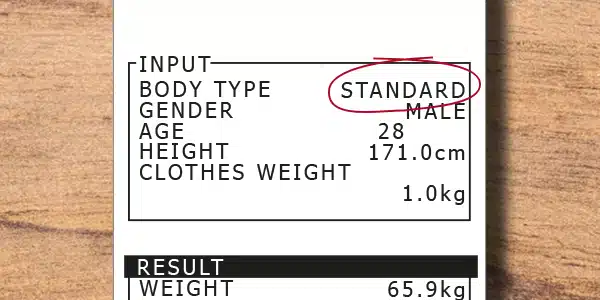
As a general guideline, we recommend ‘Standard’ to most users. Athlete mode is only for individuals who carry out more than 10 hours of intensive aerobic exercise a week and who have a resting heartbeat of under 60bpm.
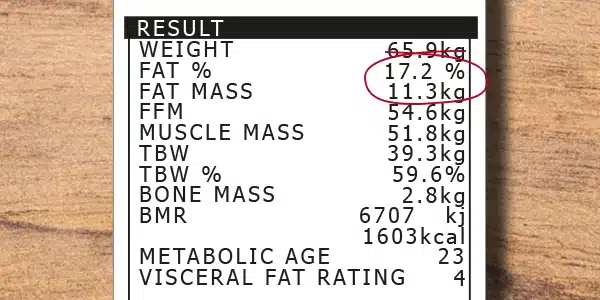
Body fat percentage is the amount of fat as a proportion of your body weight. Fat mass is the actual weight of fat in your body. Body fat is vital to basic bodily functions such as regulating body temperature, storing vitamins and cushioning joints. Yet, too much fat can damage your health.
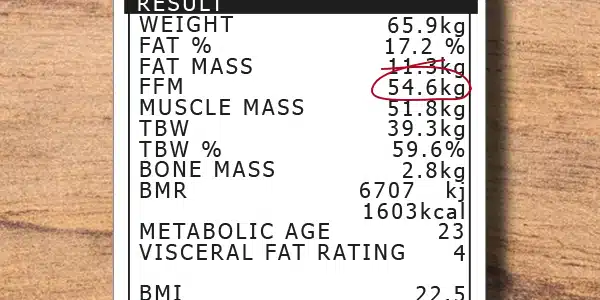
Fat free mass is everything in the body that is not fat; muscle, water, bone, connective tissue etc. Muscle acts as the body’s natural ‘fat-burning engine’, therefore it is important to maintain or even gain healthy muscle mass when dieting or exercising.
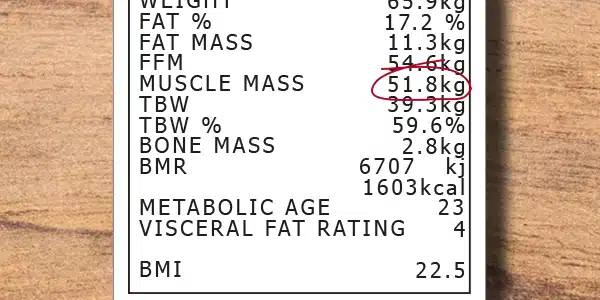
Muscles play an important role as they act as the body’s engine in consuming energy (calories). As you exercise more, your muscle mass increases, which in turn accelerates the rate of energy or calories consumed. Increasing muscle mass will raise your metabolic rate, helping you to reduce excess body fat levels and lose weight the healthy way. Muscle mass varies from person to person, therefore your results are only a guide should you wish to monitor your progress as a result of increased physical activity.
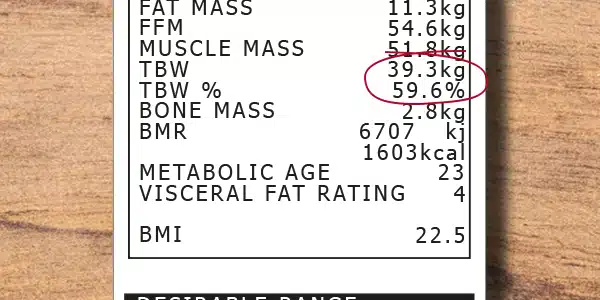
Total body water is the weight of water in your body. Total body water percentage (TBW%) is the total amount of fluid in the body expressed as a percentage of the total weight. Being well hydrated will help concentration levels, sports performance and general wellbeing.
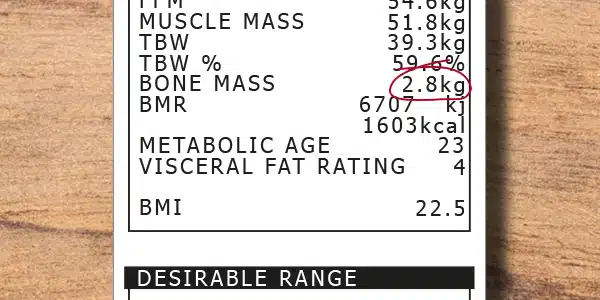
Based on research findings there is a close correlation with bone and FFM (fat free mass). The development of muscle tissue through exercise has been shown to encourage stronger, healthier bones. It’s important that you should aim to develop and maintain healthy bones through plenty of exercise along with a calcium-rich diet. There is no healthy range or target for bone mass but the regular Health Checks allow you to monitor any changes over time.
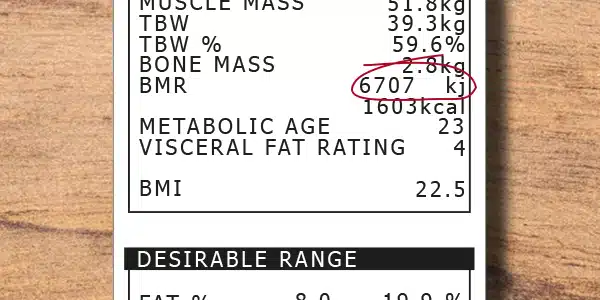
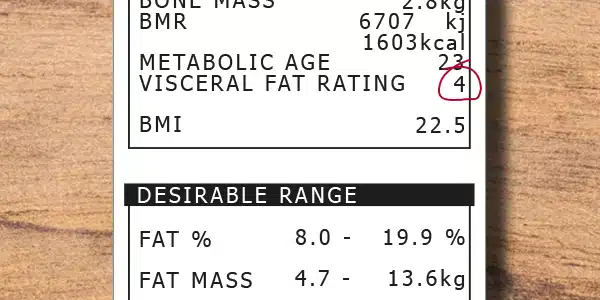
Basal metabolic rate (BMR) is the daily minimum level of energy or calories needed at rest for your body to
function effectively. A person with a high BMR can burn more calories at rest than a person with a low BMR.
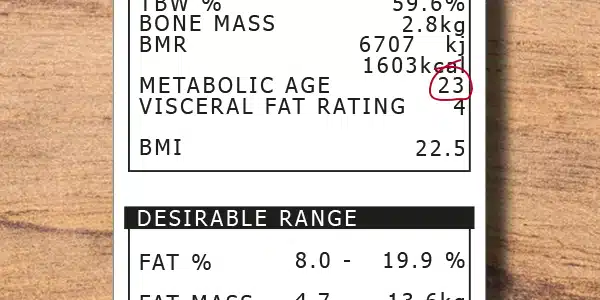
Metabolic age rating indicates what age your BMR is currently rated at compared to other age groups. If the age indicated is higher than your actual age then you need to improve your BMR by increasing exercise levels. Building muscle will burn more calories, even at rest!
Visceral fat is the harmful fat in the stomach area, surrounding the vital organs. Ensuring you have a healthy level reduces the risk of certain conditions such as heart disease, high blood pressure and type 2 diabetes.
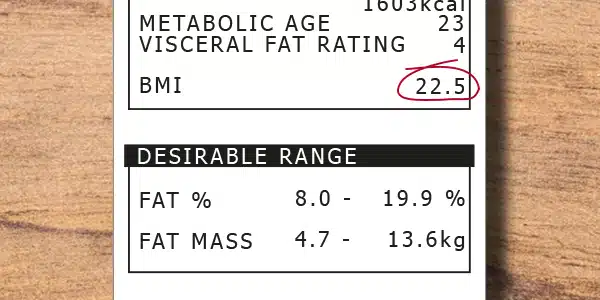
BMI gives you an idea of whether you are underweight, overweight or an ideal weight for your height. It is
a useful measurement for most people over 18, but there are limitations to this system. For instance, adults with a very athletic build (e.g. professional athletes) could show as overweight. This is because muscle weighs more than fat and BMI does not take this into account. If you’re pregnant, the BMI does not apply.
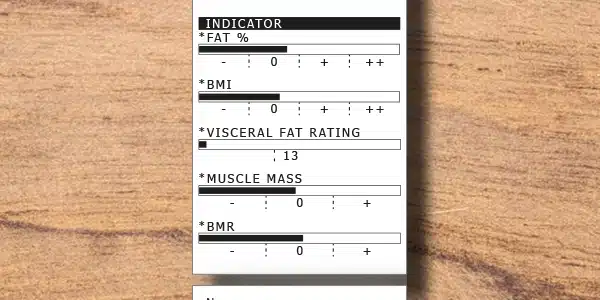
The indicator guides are a visual way of checking your results and monitoring your improvement. The minus and plus symbol shows there is room for improvement.
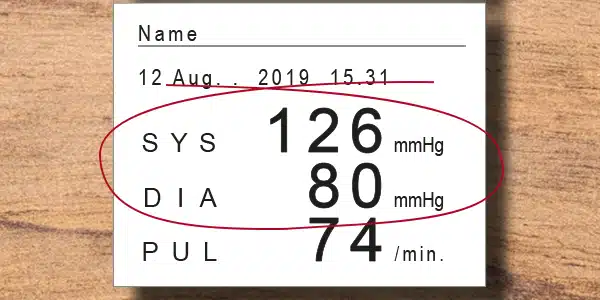
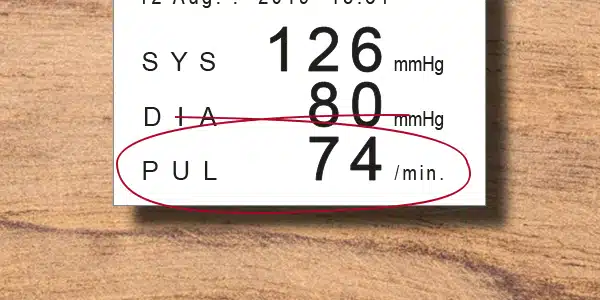
Blood pressure (BP) is the pressure exerted by circulating blood upon the walls of blood vessels. During
each heartbeat BP varies between a maximum (systolic) and a minimum (diastolic) pressure. BP is measured on the inside of the elbow at the brachial artery, which is the upper arm’s major blood vessel that carries blood away from the heart. BP is usually expressed in terms of the systolic pressure over diastolic pressure (mmHg), e.g. 120/80.
This is the number of times the heart beats every minute when relaxing. At rest, the heart normally beats at around 72 beats per minute. The lower the resting heart rate the fitter the individual usually is.
Get this handy 2-page calendar, featuring over 65 wellbeing campaigns, updated throughout the year to help you plan your wellbeing programme.
We just need a few details, then you’ll have full access to our free guide!